
Subtotal ₹0.00
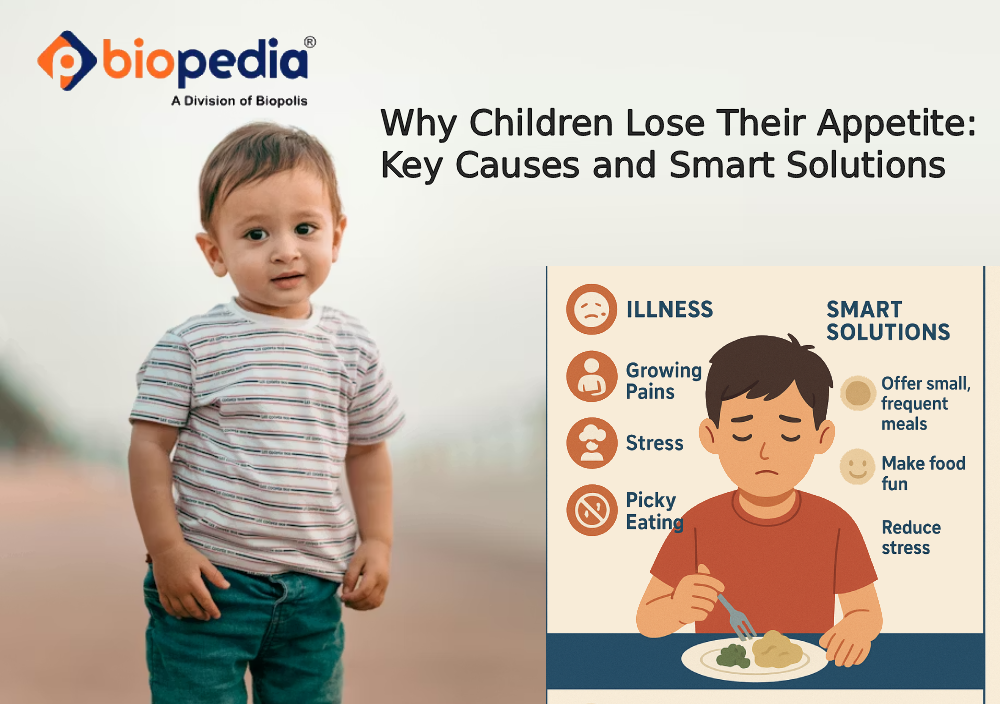
A child’s appetite is unpredictable, and when a child does not eat or the amount of food to be eaten is reduced without warning, it is always a concern to the parents. The causes of anorexia and the ways of adjusting the eating habits practically can help to sustain the appropriate growth and energy state.
In this blog, we discuss causes of low appetite in children and offer simple and concise advice on how to encourage your child to develop good eating habits.
Common Reasons Behind Loss of Appetite in Children
1. Slower Growth Phases
The stages of growth release in children are not uniform, and when they grow slowly, their appetite tends to decrease automatically. This is a normal stage, typically occurring between ages 1 and 5, and it may not be a sign of a health problem.
2. Frequent Snacking
Regularly in-between meals, particularly the consumption of sugary or processed foods, restricts the sensation of hunger during mealtimes.
3. Illness or Infection
Any mild illness, such as a cold, sore throat, fever, or stomach infection, can temporarily suppress appetite. The appetite may not be fully restored even after recovery, and this can take a few days.
4. Constipation
If the child does not exhibit regular movements, the pain or bloating may lead to decreased appetite. Poor hydration, a diet low in fiber, or lack of activity usually contribute to this problem.
5. Emotional Factors
Eating habits may be influenced by stress, fear, new school atmosphere, changes in the family, or anxiety. During emotionally stressful periods, children might develop an odd idea of skipping meals.
6. Iron Deficiency
Children with high consumption of milk in comparison to iron-containing foods are more prone to iron deficiency.
7. Picky Eating Pattern
Children are choosy eaters because of the texture, smell, or color of food. This discriminating food intake narrows down the intake, thereby decreasing appetite over time.
8. Distractions During Meals
Children would be less conscious of hunger owing to screens, toys, and heavy noise during mealtimes.
9. Medication Side Effects
Some medications to treat infections, allergies, or behavioral disorders may cause temporary loss of appetite.
Practical Tips to Improve Your Child’s Appetite
1. Maintain a Fixed Meal Routine
As the child eats regularly, the body becomes used to the pattern, which allows the child to have enhanced appetite regulation.
2. Limit Snacking Between Meals
Take only light and nutritious snacks, such as fruits or yogurt. Avoid sugary foods, packaged foods, or juices that leave the stomach full without nourishment.
3. Add Nutrient-Dense Foods in Small Portions
If the child refuses to eat large meals, the child can be given small portions filled with nutrients. Consume nuts, eggs, bananas, ghee, whole grains, and vegetables in innovative ways.
4. Encourage Water Intake
Feed on water at regular times, but not excessive amounts of water before or during meals.
5. Make Mealtime Screen-Free
Eliminate mobile phones, television, and toys from the dinner table to help the child concentrate on the food.
6. Introduce New Foods Gradually
The children’s taste buds are numbed from repeated exposure, so they are actually desensitized to new tastes and textures.
7. Ensure Adequate Sleep
Inadequate sleep or unstable sleeping patterns may decrease appetite. A rested child exhibits better signs of hunger as well as better digestion.
8. Encourage Physical Activity
A minimum of 45-60 minutes of physical activity per day can enhance appetite and digestion.
9. Include Iron-Rich Foods
Consume green vegetables, peas, jaggery, fish, dry fruits, and fortified cereals to stay healthy in terms of iron. Combine iron-rich foods rich in vitamin C, such as tomatoes or oranges.
10. Avoid Forcing Food
In their place, provide choices, foster self-feeding, and complement little steps to establish a positive food relationship.
When to Consult a Pediatrician
If the loss of appetite lasts more than two weeks, results in weight loss, affects energy levels, or is accompanied by other symptoms such as vomiting, fever, or weakness, consult a doctor. A professional evaluation helps rule out nutritional deficiencies, allergies, or medical problems.
A child’s appetite can fluctuate; however, normal eating patterns can be reestablished by the application of consistent routines, vigilant feeding practices, and healthy nutrition. Aim for balance, patience, and gradual improvements, rather than perfection.
Comments are closed