
Subtotal ₹0.00

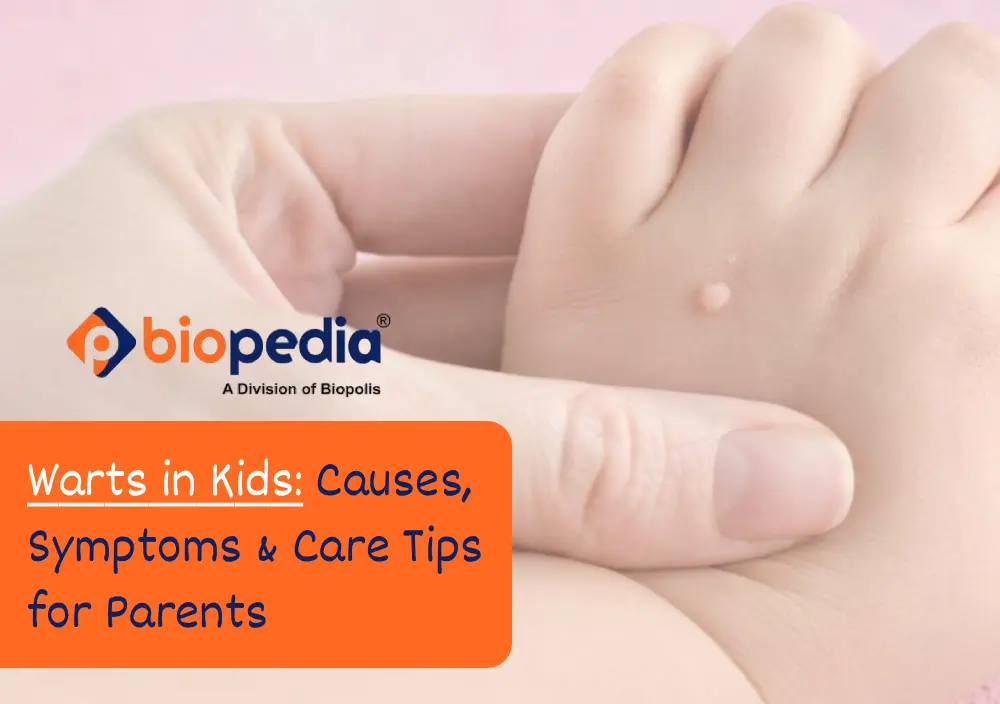
Warts are one of the issues that a child has on the skin, which is a cause of anxiety to the parents, even though they do not cause any harm to the child. These are small, rough bumps that can be found anywhere on the body, but mostly on the hands, feet, and fingers. Although they may be unsightly and even uncomfortable, warts are generally easy to manage and may not always fade away.
With proper knowledge about the causes, symptoms, treatment, and prevention, you can be more helpful to your child and get less anxious about the condition.
What Are Warts?
Once the virus enters the skin via tiny scratches or tears, it causes rapid growth of skin cells, resulting in a wart. Children are more susceptible to warts because their immune systems are still developing, and they are therefore less effective in combating the virus as compared to adults.
Warts exist in various forms, although the ones that are common among children include:
- Common warts: They are rough bumps raised usually on fingers and hands.
- Plantar warts: They are found on the soles of the feet and can be uncomfortable when walking.
- Flat warts: These are small, round warts that are grouped, usually on the face, arms, or legs.
- Filiform warts: Thread-like warts around the mouth or lips, or on the eyelids.
How Do Children Get Warts?
The warts can be contracted by a child touching an infected surface, sharing personal objects, or direct skin contact with a person who already has warts. The virus proliferates in warm and wet places such as swimming pools, locker rooms, and playground surfaces.
Certain practices may increase the likelihood of a child getting warts, including:
- Chewing nails or biting toenails
- Wearing uncovered shoes on the streets
- Sharing towels, shoes, or toys
- Rubbing on the current warts, which leads to their transmission
Symptoms Parents Should Watch For
Warts are not difficult to recognise. They are typically:
- Little swellings on the skin
- Light brown or rough-colored, brown, or skin-colored
- At times punctuated with small black dots (clotted blood vessels)
- Usually on hands, feet, knees, or face
Do Warts Need Medical Treatment?
Warts also go away on their own in most instances as the immune system combats the virus. A process that is done, though, could take several months or even two years.
Medical treatment is advised when:
- Warts are sore and commonly infectious
- Plantar warts cause difficulty in walking
- Warts are found on the sensitive parts of the face
- Your child possesses a poor immune system
Home Care and Management Tips
Although the treatment of warts has not been discovered yet, some measures can be taken to keep them under control:
- Use over-the-counter wart treatments recommended for children
- Apply a bandage to cover warts to prevent scratching
- Wash and dry your skin, especially after playing or swimming
- Encourage anti-nail-biting and scratching
- Ensure that your child wears shoes in such places as pools and showers.
How to Prevent Warts in Children?
The risk can be significantly reduced with proper exposure and good hygiene, even though it is not entirely preventable. The following are habits to be taught to your child:
- Do not touch or scratch warts
- Do not go barefoot on the streets
- Do not share personal belongings such as towels, socks, and clippers
- Wash your hands frequently, particularly after outdoor games
When to Seek Medical Advice
Although warts are not harmful in general, it is recommended to consult a doctor when:
- The wart varies in color, form, or dimensions.
- It is painful, bloody, or appears infected
- New warts appear rapidly
- Your child has diabetes or an immune-related disease
- Home remedies do not produce results in months
Children with warts may also become problematic, though they are hardly something to worry about seriously. Understanding their nature, modes of transmission, and the most effective means of dealing with them can help parents in addressing the problem amicably and efficiently. Most warts fade away on their own with time, care, and patience.
Comments are closed